Dirt Under Their Nails, Seeds in Their Pockets: The Activists Turning America's Cities Green
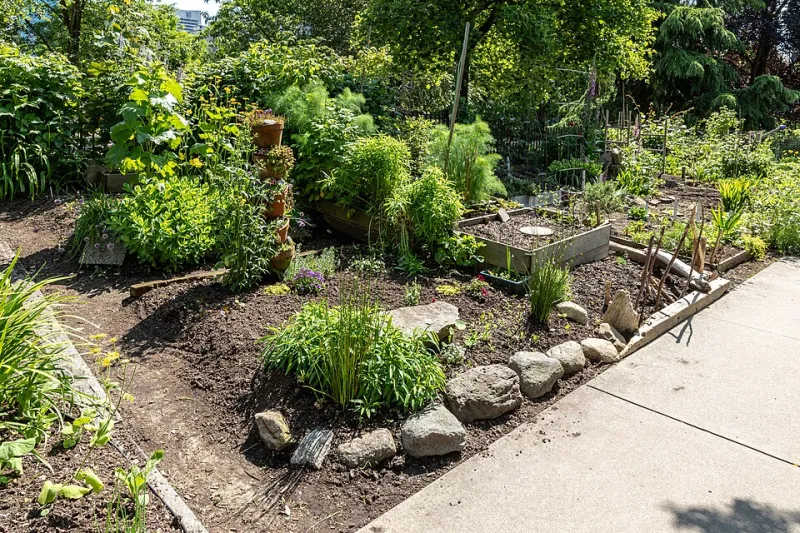
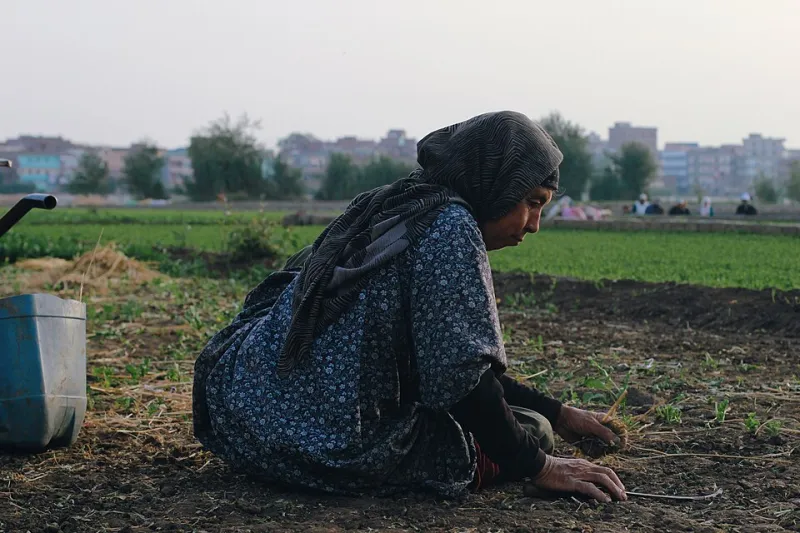
Photo: Dietmar Rabich, CC BY-SA 4.0, via Wikimedia Commons
Let's be honest about something: the American city was not designed with nature in mind. It was designed for cars, commerce, and concrete. Green space, where it exists at all, often feels like an afterthought—a strip of grass between a parking lot and a highway, a few sad trees bolted into downtown sidewalks, a park that closes at dusk.
But something is shifting. Across the country—from the South Side of Chicago to the Boyle Heights neighborhood of Los Angeles to the East New York section of Brooklyn—a growing movement of urban gardeners, community organizers, and flat-out plant obsessives is reclaiming that concrete. They're planting in vacant lots, cultivating rooftops, sneaking seeds into neglected sidewalk strips, and in doing so, they're rewriting what an American city can look and feel like.
This isn't just about aesthetics, though the transformation is often stunning. It's about food justice, climate resilience, mental health, and the radical act of deciding that your neighborhood deserves beauty and nourishment—regardless of what the city planners say.
The Problem with Concrete Monocultures
America's urban food deserts are well-documented and deeply troubling. The USDA estimates that roughly 19 million Americans live in low-income areas with limited access to fresh, affordable food—and the problem is overwhelmingly concentrated in communities of color. In cities like Detroit, Baltimore, and Memphis, entire zip codes go without a single full-service grocery store.
At the same time, urban heat islands—areas where the density of buildings and pavement causes temperatures to run significantly hotter than surrounding rural areas—are making city summers increasingly dangerous. Heat-related illness is now one of the leading causes of weather-related death in the U.S., and the neighborhoods hit hardest are almost always the ones with the least tree canopy and green space.
These aren't separate problems. They're symptoms of the same systemic disinvestment in urban communities. And while policy change is slow and political will is inconsistent, community gardens have emerged as one of the most immediate, tangible responses available to ordinary people.
Guerrilla Roots: When Gardeners Don't Wait for Permission
Not every urban garden starts with a permit and a city grant. Some of the most impactful green spaces in America began with someone who was simply tired of looking at a vacant lot and decided to do something about it.
Guerrilla gardening—the practice of planting in unauthorized public or private spaces—has a long and colorful history in American cities. In the 1970s, activists in New York City's Lower East Side began transforming rubble-strewn lots abandoned during the city's fiscal crisis into community gardens. Many of those gardens still exist today, protected by community land trusts after fierce battles with developers in the 1990s.
The tradition is alive and well. In Los Angeles, groups like the LA Community Garden Council have documented hundreds of informal gardens that began as guerrilla operations before gaining official recognition. In Philadelphia, the Pennsylvania Horticultural Society's Philadelphia LandCare program has transformed over 12,000 vacant lots—and researchers found that neighborhoods surrounding those greened lots saw significant reductions in gun violence and reported stress levels.
That last finding deserves to sit with you for a moment. Green space reduces violence. Not as a metaphor. As a measurable, documented outcome.
Rooftop Revolution: Growing Up When You Can't Grow Out
In dense cities where ground-level space is scarce and expensive, urban farmers have started looking up. Rooftop gardens and urban farms are proliferating across American cities, and some of them are operating at genuinely impressive scale.
Brooklyn Grange, spread across multiple rooftop sites in New York City, farms over 100,000 pounds of organically grown produce annually while also running educational programming and hosting community events. In Chicago, The Plant—a former meatpacking facility on the South Side—has been converted into a net-zero urban farm and food business incubator that's become a model for cities nationwide.
In Atlanta, a city not typically associated with urban farming innovation, the Murphy Crossing development is incorporating rooftop growing space into a mixed-use project explicitly designed to address food access in historically underserved Westside neighborhoods.
These projects share a common thread: they're not just growing food. They're building economic opportunity, creating jobs, educating young people about where their food comes from, and demonstrating that cities can function as ecosystems rather than food deserts.
Seeds of Equity: Why This Movement Has to Center Justice
Here's where we need to be clear-eyed, because the urban greening movement has a complicated history. For every community garden that's genuinely rooted in local needs, there's another that's arrived as a harbinger of gentrification—a photogenic raised bed that signals to developers that a neighborhood is becoming desirable, and to long-term residents that their time there may be running out.
This tension is real, and the people doing the most thoughtful work in urban agriculture are grappling with it openly.
"We have to be intentional about who the garden is for and who controls it," says Denise Carter, co-founder of a community garden collective in Detroit's North End neighborhood that prioritizes land ownership by community members rather than outside nonprofits. "A garden that displaces the people it's supposed to serve isn't a community garden. It's just landscaping for someone else's vision."
The most durable urban gardening initiatives tend to be the ones led by and accountable to the communities they're embedded in—where the people doing the planting are also the people making the decisions about how the space is used, who gets the produce, and what happens to the land.
Organizations like the Detroit Black Community Food Security Network, the East New York Farms! cooperative, and La Finquita in Philadelphia are models of what community-controlled urban agriculture can look like when it's done right: deeply local, politically engaged, and genuinely nourishing.
What Cities Can Do (And What They Often Won't)
Local governments are increasingly recognizing urban greening as a climate adaptation strategy—not just a feel-good initiative. Cities like Seattle, Denver, and Minneapolis have invested significantly in urban tree canopy programs, stormwater management through green infrastructure, and community garden support.
New York City's GreenThumb program, the largest urban community gardening program in the country, supports over 550 community gardens across the five boroughs with technical assistance, tools, and some protection from development. It's imperfect and chronically underfunded, but it represents a genuine institutional commitment to community-controlled green space.
Still, the gap between what cities could do and what they actually do remains enormous. Zoning codes in most American cities still make urban farming unnecessarily complicated. Vacant land that could be community gardens sits in legal limbo for years while bureaucracies figure out liability. Funding for community garden programs is often the first thing cut when budgets tighten.
The activists doing this work aren't waiting. They're planting now, fighting for policy change simultaneously, and building the kind of green infrastructure that cities should be building themselves.
The City We Could Have
Imagine, for a moment, a different version of the American city. One where every neighborhood has access to fresh produce within walking distance. Where summer heat is tempered by tree canopy and rooftop gardens. Where vacant lots become gathering places rather than eyesores. Where children grow up knowing where food comes from because they've grown it themselves.
That city isn't a utopian fantasy. It's being built, block by block, garden by garden, seed by seed, by people who decided not to wait for permission.
The concrete jungle is getting greener. And the people making it happen have dirt under their nails and fire in their hearts.
That's the kind of rewilding we're here for.