Rooted in Ritual: How a Generation of Plant Parents Turned Potting Soil into Self-Care
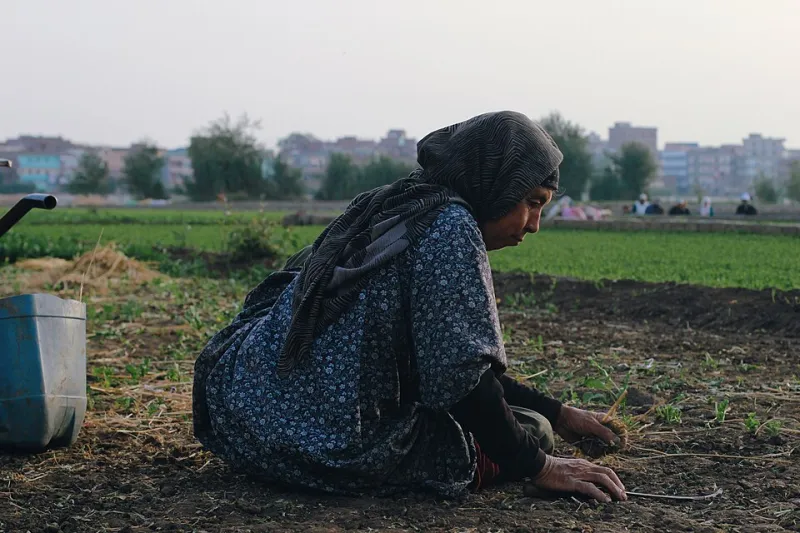
Photo: AmiraAdel93, CC BY-SA 4.0, via Wikimedia Commons
Somewhere between a global pandemic, a mental health crisis, and the endless scroll of social media, millions of millennials and Gen Zers discovered something quietly radical: keeping a plant alive felt really, really good.
Not just good in an aesthetic, "my apartment looks like a jungle and I'm obsessed" kind of way—though that's absolutely part of it. Good in the way that slowing down, being present, and nurturing something outside of yourself tends to feel good. Plant parenting, it turns out, isn't just a hobby. For a whole generation of Americans, it's become a full-blown wellness practice.
The Numbers Don't Lie: Plants Are Having a Moment
The indoor plant market in the U.S. has exploded over the past five years, with sales surpassing $1.7 billion annually and showing no signs of slowing down. Google searches for "how to care for houseplants" spiked over 60% during the COVID-19 lockdowns of 2020, and plant-focused hashtags like #PlantTok and #PlantParent have collectively racked up billions of views across TikTok and Instagram.
But this isn't just a trend driven by aesthetics or boredom. Researchers and mental health professionals are paying close attention to what's being called "horticultural therapy"—the intentional use of plant-based activities to support psychological wellbeing—and the science is pretty compelling.
"There's something called biophilia, which is essentially our innate human tendency to seek connection with nature," explains Dr. Maya Okonkwo, a licensed therapist based in Brooklyn who incorporates plant care into her sessions with clients. "When we're surrounded by concrete and screens all day, that need doesn't go away. Plants give people a tangible, low-stakes way to reconnect with living systems. And that reconnection has real mental health benefits."
Those benefits include reduced cortisol levels, improved mood, lower blood pressure, and even enhanced concentration. Studies from institutions like Rutgers University and the University of Vermont have shown that interacting with plants—touching soil, watering, pruning—can trigger measurable stress reduction responses in the body.
What 'Plantita' Culture Actually Means
The word plantita (and its masculine counterpart, plantito) has roots in Filipino culture, where it describes a person—often a middle-aged woman—who is deeply devoted to her plants. But in the past few years, the term has been enthusiastically adopted by younger generations across the U.S., particularly within Latino and Asian-American communities, and it's evolved into something bigger than its origins.
Today, calling yourself a plantita is almost a personality statement. It signals that you care about your living space, that you're in touch with slow, intentional living, and that you find joy in the mundane ritual of misting a fiddle-leaf fig on a Sunday morning. It's become shorthand for a particular kind of eco-conscious, wellness-forward identity that resonates deeply with Gen Z and younger millennials.
"I started using the term because my lola [grandmother] called herself a plantita, and it felt like a way to connect with her and with my roots," says Camille Santos, a 27-year-old graphic designer in Los Angeles who runs the plant community account @CamilleGrows on Instagram. "But now it means something to me beyond that. My plants are genuinely part of my mental health routine. Watering them in the morning sets the tone for my whole day."
Camille's experience is far from unique. Online communities like the r/houseplants subreddit (over 3 million members), the Facebook group "Houseplant Hobbyist" (1.5 million strong), and dozens of Discord servers dedicated to specific plant genera have created rich social ecosystems where plant parents share care tips, celebrate new growth, and offer support during the inevitable "why is my pothos dying" crises.
The Social Media Garden
Plant content on social media occupies a fascinating space: it's aspirational without being alienating, educational without being dry, and deeply communal in a way that a lot of online spaces simply aren't. A thriving #PlantShelfie post tends to generate warmth, not comparison. People show up in the comments with encouragement, identification help, and genuine enthusiasm.
"The plant community online is one of the most genuinely supportive corners of the internet," says Jordan Lee, a 24-year-old content creator in Chicago whose TikTok series on budget plant care has amassed over 200,000 followers. "There's no gatekeeping. It doesn't matter if you have a $300 rare aroid or a $4 pothos from Trader Joe's—everyone's welcome."
That accessibility is a big part of the appeal. Unlike fitness culture or even some corners of the wellness world, plant parenting has a remarkably low barrier to entry. A cutting from a friend, a clearance succulent from Home Depot, a mason jar on a windowsill—that's all you need to start.
More Than Aesthetic: The Real Therapeutic Work
Horticultural therapists—yes, that's a real and growing profession—have been advocating for the healing power of plants long before #PlantTok made it cool. The American Horticultural Therapy Association (AHTA) has documented the benefits of plant-based interventions across settings ranging from VA hospitals to rehabilitation centers to schools.
But what's new is the way younger generations are self-prescribing plant care as part of their mental health toolkit—and doing so with remarkable intentionality.
"I think about it like this: my plants need consistent care, and so do I," says Marcus Webb, a 31-year-old teacher in Atlanta who started collecting plants during a particularly rough bout of anxiety in 2021. "Learning to read what my plants need—more light, less water, different soil—actually taught me to pay closer attention to my own needs. It sounds cheesy, but it genuinely rewired how I approach self-care."
Dr. Okonkwo sees this kind of parallel process in her practice regularly. "Plants offer something that's hard to find in our hyper-digital world: immediate, sensory feedback. You touch the soil, you see the growth, you smell the earth. That kind of present-moment engagement is essentially mindfulness, just in a form that feels natural rather than forced."
Growing Forward
As the plantita movement continues to bloom (sorry, we had to), it's worth sitting with what it actually represents: a generation reaching for connection, for slowness, for something alive in a world that often feels overwhelming and abstract. Whether it's a single succulent on a studio apartment windowsill or a 200-plant collection that's taken over an entire living room, the impulse is the same.
We want to grow things. We want to be responsible for something green and living. We want, in some quiet and deeply human way, to root down.
And honestly? That feels like exactly the kind of self-care we need right now.