Tiny Terrace, Big Harvest: How to Grow Real Food on Your Apartment Balcony
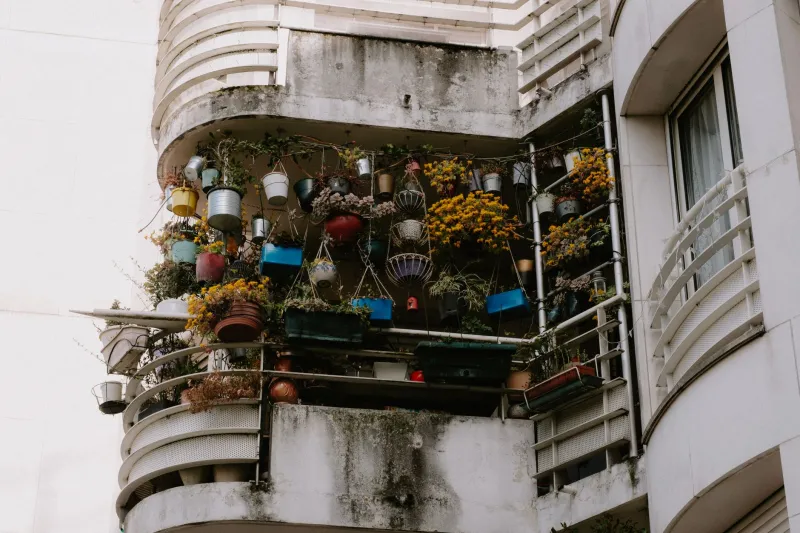
Let's be honest about something: most apartment gardening content is aspirational in the wrong direction. It shows you a sun-drenched penthouse terrace in a temperate city, overflowing with tomatoes, and calls it "achievable." Meanwhile, you're standing on a 4x6 balcony in a Minneapolis winter wondering if you can even grow basil.
The answer, by the way, is yes. And probably more than basil.
Balcony food gardening is genuinely possible for renters across most of the US, and it's growing—pun fully intended—as more people prioritize food security, sustainability, and the deeply satisfying act of eating something they grew themselves. You just need the right approach for your specific situation.
Start With What You're Working With
Before you buy a single seed packet, take stock of your actual conditions. Balcony gardening success lives or dies on these three variables: sunlight, weight limits, and climate zone.
Sunlight is everything. South-facing balconies with six or more hours of direct sun can support fruiting plants like tomatoes, peppers, and cucumbers. East or west-facing spots with partial sun are better suited to leafy greens, herbs, and root vegetables. North-facing balconies aren't hopeless—microgreens, mint, and certain lettuces will work—but you'll need to manage expectations.
Weight limits are real and often overlooked. A large pot of wet soil is heavy. Check your lease or ask your building manager about load-bearing capacity. As a general rule, keep containers near the outer edge where structural support is strongest, and favor lightweight materials like fabric grow bags and fiberglass pots over ceramic or terracotta.
Your USDA hardiness zone shapes your growing season. Renters in zones 9-11 (Southern California, Florida, Gulf Coast) can grow food nearly year-round. Those in zones 5-7 (the Midwest, Mid-Atlantic, Pacific Northwest) have a defined warm season to maximize. In zones 3-4 (upper Midwest, northern New England), season extension tools like row covers and cold frames become essential even on a balcony.
The High-Yield Lineup for Small Spaces
Not all vegetables are created equal when space is scarce. You want plants that produce a lot relative to the room they occupy—and that you'll actually eat.
Leafy greens are the MVP of balcony farming. Lettuce, spinach, kale, arugula, and Swiss chard can be harvested continuously through a cut-and-come-again method, meaning one planting keeps giving for weeks. A single 12-inch container of mixed greens can supply a salad a week.
Herbs punch massively above their weight. Basil, cilantro, parsley, chives, and mint take up almost no space and can dramatically reduce your grocery spending. A dedicated 18-inch herb box is a legitimate game-changer for home cooks.
Cherry tomatoes outperform their larger cousins in containers. Varieties like 'Sun Gold,' 'Tumbling Tom,' and 'Sweet Million' are bred for compact growing and produce abundantly. Pair them with a cage or stake tied to your railing and you're in business.
Peppers—sweet or hot—thrive in containers and tolerate heat well, which matters on a sun-baked urban balcony. They're slower to fruit but rewarding once they get going.
Radishes and green onions are the sprinters of the vegetable world. Radishes can go from seed to harvest in as little as 25 days, making them perfect for impatient gardeners or for filling gaps in your container rotation.
Go Vertical—Seriously
The single best thing you can do for a small balcony garden is think up, not out. Vertical growing systems—wall-mounted pocket planters, stackable towers, trellis panels—can multiply your growing surface without adding any floor footprint.
A simple cedar trellis panel leaned against a wall and planted with pole beans or small cucumbers can produce pounds of food in a 2-foot-wide footprint. Pocket planters hung on balcony railings are excellent for strawberries and trailing herbs. Stackable tower planters (companies like Mr. Stacky make affordable versions) let you grow a dozen plants in the space of one standard pot.
For renters worried about wall damage, freestanding trellis systems and tension rod-mounted vertical planters require no drilling and leave no marks.
Watering and Feeding in a Container World
Container plants dry out faster than in-ground gardens—sometimes dramatically so on a hot, windy balcony. Self-watering containers with built-in reservoirs are worth every penny for anyone who can't check on plants daily. Drip irrigation kits that connect to a standard outdoor spigot (or even a hose bib adapter inside your sliding door) are another solid investment.
Because containers leach nutrients with every watering, you'll need to feed your plants regularly. A balanced liquid fertilizer applied every two weeks during peak growing season keeps things productive. For an even more sustainable approach, compost tea brewed from a small countertop worm bin gives plants a nutrient boost with zero synthetic inputs.
Real Talk: Troubleshooting Common Problems
Leggy, stretched-out seedlings? Not enough light. Move them to your sunniest spot or supplement with a small grow light during darker months.
Yellowing leaves despite regular watering? Likely a nutrient deficiency or overwatering. Check that your containers drain freely and feed more consistently.
Aphids or spider mites? A spray bottle of diluted neem oil handles most soft-bodied pest problems without chemicals that could harm you, your neighbors, or beneficial insects.
Wind damage? High-rise balconies can be brutal. Choose compact, sturdy varieties, use heavier containers for stability, and consider a simple windbreak made from shade cloth or lattice panels.
Celia Nguyen, a renter in Chicago's Wicker Park neighborhood, grew 40 pounds of vegetables last season on a fifth-floor balcony smaller than most walk-in closets. Her secret? "I stopped trying to grow everything and got really good at growing a few things. Tomatoes, basil, kale. That's my whole balcony. It feeds me."
Start there. The rest will grow from that.