What Lives Beneath: The Case for Treating Your Garden Soil Like the Living Thing It Is
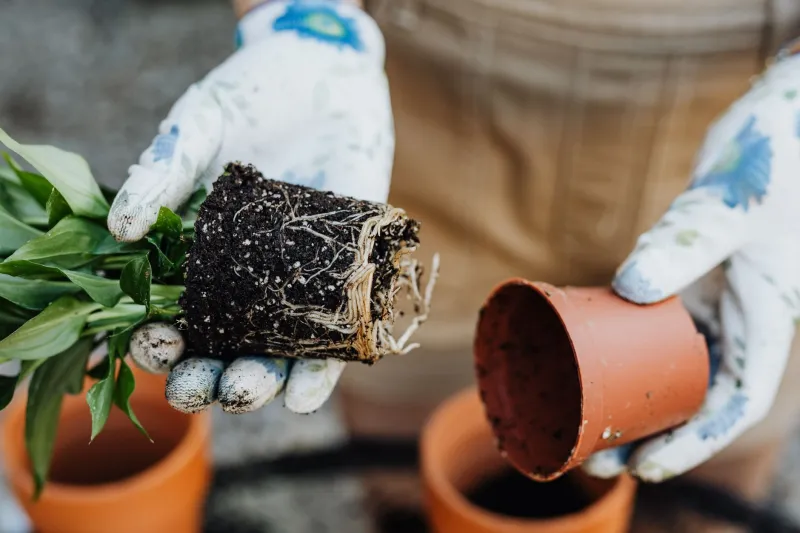
Here's a number worth sitting with: a single teaspoon of healthy garden soil contains more living organisms than there are people on Earth. Bacteria, fungi, nematodes, protozoa, arthropods—an entire civilization operating in darkness, breaking down organic matter, cycling nutrients, building structure, and making plant life possible in ways we're still only beginning to understand.
Now consider what industrial agriculture does to that civilization. Tilling destroys fungal networks that took years to build. Synthetic nitrogen fertilizers feed plants while starving the microbial communities that would otherwise do that work naturally. Herbicides and pesticides cascade through the food web in ways that compound season after season. According to the United Nations Food and Agriculture Organization, roughly a third of the world's agricultural soils are already degraded. In the US, topsoil is eroding roughly ten times faster than it forms.
This is not a background issue. It is one of the defining environmental crises of our time—and most mainstream coverage barely touches it.
The Industrial Bargain, and What It Cost Us
The Green Revolution of the mid-twentieth century was, by certain measures, a triumph. Synthetic fertilizers, hybrid seeds, and mechanized farming dramatically increased food yields and helped feed a rapidly growing global population. The bargain seemed straightforward: trade biological complexity for scalable productivity.
What wasn't accounted for was the long-term cost to the soil itself. Healthy soil is not an inert growing medium. It is a living ecosystem—technically called the soil food web—where every organism plays a role in nutrient cycling, water retention, carbon sequestration, and disease suppression. When that web is disrupted, plants become dependent on external inputs to compensate. The more inputs you apply, the more the native biology retreats. It becomes a feedback loop that's very hard to break at industrial scale.
Conventional monoculture farming—the dominant model across most of the American Midwest—takes this to an extreme. Fields of a single crop, planted in chemically treated soil, with no cover crops between seasons, leave ground bare and biologically depleted for months at a time. Rain compacts the exposed surface, runoff carries topsoil into waterways, and the carbon that healthy soil would otherwise lock in place escapes into the atmosphere.
The connection between soil degradation and climate change is direct and documented. Degraded soils release carbon. Healthy, biologically rich soils sequester it. This is why some climate scientists now consider regenerative agriculture—farming practices that restore soil biology—one of the most scalable tools available for carbon drawdown.
Where the Home Gardener Comes In
You might be wondering what your backyard raised bed has to do with any of this. Quite a lot, it turns out.
Home gardeners in the US collectively tend an enormous amount of land. The National Gardening Association estimates that roughly 35% of American households grow food at home, and that doesn't account for the even larger number of people managing ornamental gardens, lawns, and landscaping. When those millions of gardeners make soil-conscious choices, the aggregate effect is genuinely significant.
More immediately, your garden is a local ecosystem. The soil biology you cultivate—or destroy—affects the water that moves through your yard into storm drains, the insects that pollinate your neighbors' plants, and the microhabitats available to birds and beneficial insects in your neighborhood. Your patch of earth is not isolated. It is connected, whether you think about it that way or not.
Composting: The Most Radical Act in Your Backyard
If you do only one thing differently after reading this, make it composting. Returning organic matter to the soil is the single most effective way a home gardener can support soil biology. Compost feeds bacteria and fungi, improves soil structure, enhances water retention, and—critically—introduces diverse microbial communities that manufactured fertilizers simply cannot replicate.
The mechanics are straightforward: kitchen scraps (fruit and vegetable waste, coffee grounds, eggshells), yard waste (leaves, grass clippings, garden trimmings), and a little patience. Hot composting accelerates the process and kills weed seeds; cold composting is slower but requires almost no effort. Even a small countertop worm bin produces castings that are, pound for pound, among the most biologically active soil amendments available anywhere.
What you're doing when you compost is closing a loop that industrial food systems deliberately broke. Food comes from the earth. When we return its remnants to the earth, we participate in a cycle that sustained human agriculture for millennia before synthetic chemistry convinced us we didn't need to.
Native Plants and the Mycorrhizal Network
One of the most exciting areas of soil science in recent years involves mycorrhizal fungi—the thread-like networks that connect plant roots to the broader soil ecosystem. These networks, sometimes called the "wood wide web," allow plants to exchange nutrients and even chemical signals across distances. They are ancient, extraordinarily complex, and almost completely absent from soil that has been repeatedly tilled or treated with certain fungicides.
Native plants are particularly good at cultivating and supporting these networks, because they've co-evolved with local soil biology over thousands of years. Planting native species—whether that means native grasses, wildflowers, shrubs, or trees appropriate to your region—is one of the most ecologically powerful choices a home gardener can make. Organizations like the Native Plant Society of your state can point you toward species suited to your specific area and soil type.
This isn't just about ecology in the abstract. Gardens planted with natives tend to require less water, less fertilizer, and less intervention overall, because the plants are working with local conditions rather than against them.
Small Practices, Large Consequences
Soil restoration doesn't require a farm or a dramatic lifestyle overhaul. It begins with small, consistent choices: leaving plant roots in the ground after harvest rather than tilling them out (roots decompose and create channels for water and air), mulching bare soil to protect surface biology and retain moisture, avoiding synthetic pesticides that harm the invertebrates doing essential decomposition work, and choosing organic or compost-based fertilizers over synthetic alternatives.
None of these practices are new. Many of them are ancient. What's new is the science confirming what traditional farmers and indigenous cultivators understood intuitively for generations: the soil is not a substrate. It is a community. And like all communities, it thrives when it's supported rather than exploited.
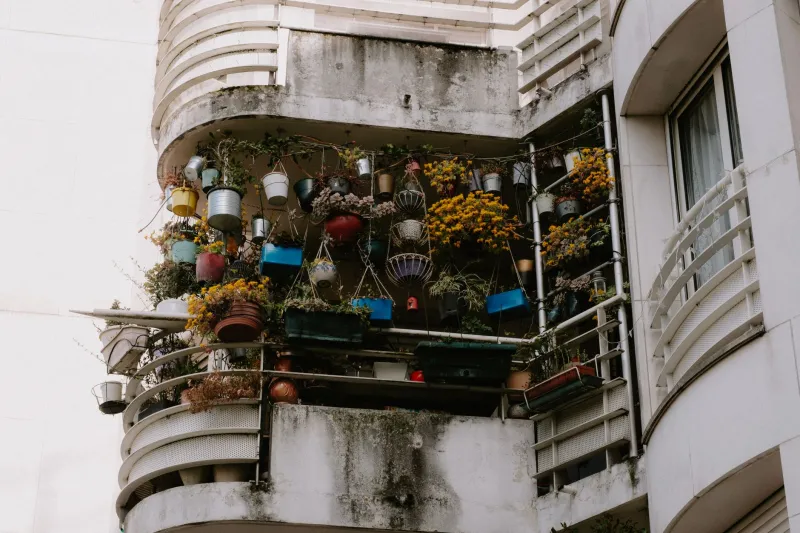
The industrial food system is not going to fix this quickly. It is too invested in the infrastructure of extraction. But you, in your backyard or your community garden plot or your apartment balcony, can start right now. You can feed the invisible world beneath your feet and watch everything above it flourish.
That's not a small thing. That might be everything.